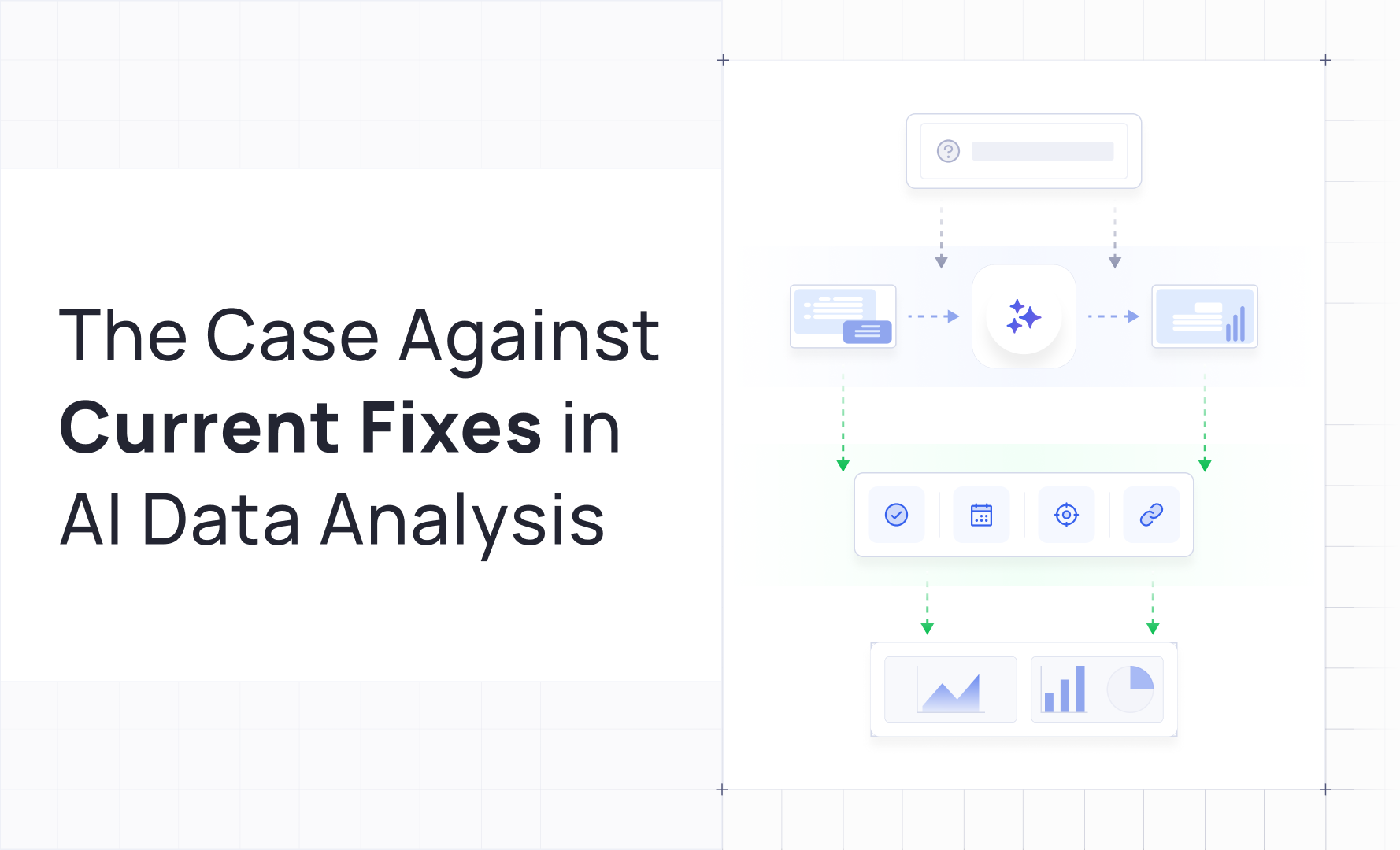
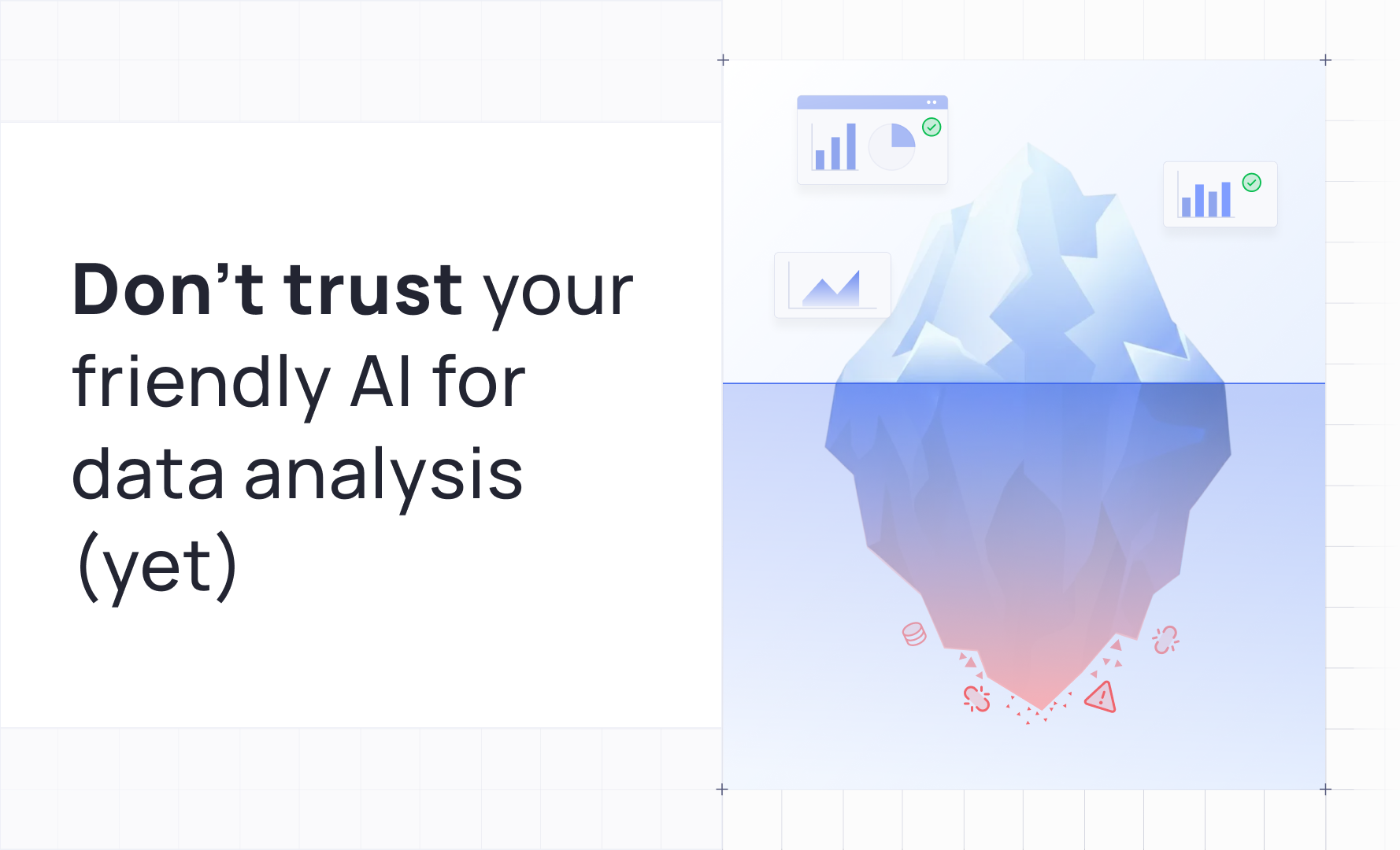
- AI augments RevOps, but it does not replace it. The work still lives at the intersection of people, process, and systems.
- Most breakdowns are not model failures. They show up as misaligned CRMs, inconsistent definitions, and “one metric, two truths” in leadership meetings.
- Where AI helps today is practical: signal-based selling, automation tied to execution, and tools that reduce manual drag while keeping humans in the loop.
- Data quality is still the constraint. Deduplication, clean records, and shared logic determine whether AI creates clarity or compounds confusion.
- Data and signals are the foundation. Without them, reporting, automation, and AI amplify what is already broken.
Watch the full conversation below.
Camela Thompson wears two hats: Head of Marketing at the RevOps Co-op, a community that's grown from 10 members to over 19,000 practitioners worldwide, and Head of RevOps at Phunware, Inc. (NASDAQ: PHUN), a company that sells mobile maps to help guests navigate hospitality properties.
That dual vantage point puts her close to what's actually happening with AI in revenue operations; not the conference keynote version, but the messy, practical reality of implementing these tools in organizations that are still trying to get their baseline data right.
Camela didn't set out to become a revenue operations leader. She started as a financial analyst, the kind of person who found comfort in spreadsheets and reconciliation. But somewhere along the way, she developed what she calls "a knack for CRM", back when being a CRM admin wasn't yet a full-time position, back when Salesforce was something companies were still figuring out, and back when nobody had heard the term "RevOps."
"As my career progressed, I got pulled into whichever go-to-market team was having issues," Thompson recalls. "I became the bridge between the people, the process, and the systems to figure out what needed to be optimized."
That bridge-building instinct eventually led her to become something of a utility player across the entire go-to-market stack. She's been an admin in Salesforce, HubSpot, Marketo, Eloqua, Zendesk, and Catalyst. If it touches revenue, she's probably had her hands in it.

Reality Check: AI Augments RevOps (But Doesn’t Replace It)
When Camela talks about AI in revenue operations, she uses a word that might surprise the optimists: cannibalize.
"AI has cannibalized a lot of the stuff I used to do on the marketing content side," she says. "It augments quite a bit of it. I've gotten more efficient, and that's let me stretch back into the revenue operations role."
This isn't a complaint, it's an observation about where the technology has actually delivered versus where it's still struggling. In marketing, AI has eaten into the work. In RevOps, it's a different story.

The distinction matters. Marketing content creation is relatively well-defined: you need copy, you have brand guidelines, the output is text or images. RevOps is messier. The work sits at the intersection of people, process, and systems, and most of it is about making sure data flows correctly and executives can trust the numbers they're seeing.
Camela’s hierarchy is deliberate: "People first, then process, then systems." It's the opposite of how most technology vendors pitch their solutions, but it reflects the reality that the most sophisticated tools fall apart without understanding what the business actually needs.
Where It Breaks: People → Process → Systems Still Comes First
Phunware, Inc. (NASDAQ: PHUN) recently underwent a dramatic transformation, changing its business model, target customers, and go-to-market approach. For RevOps, that meant inheriting a tech stack that technically existed but wasn't configured for the company's new direction. The CRM data wasn't optimized for what they're doing now. None of the setup was there.
"My first job is always to figure out what the board is looking for and what kind of business model they have," she explains. "What kind of sales motion, which teams are involved. Then I always start with: how can we get the infrastructure in place as quickly as possible to let the board know that their investment is doing well?"
This is the often-invisible work of RevOps: creating the scaffolding that allows everyone else to see what's actually happening in the business. It's not glamorous, but without it, executives make decisions based on incomplete or conflicting information.

"It's this big balance between the executive desire for as much information as possible and what's tolerated by humans," Thompson says. "And then what can we layer on top of that in terms of AI summarization and direct connectivity into the CRM to make sure that we're entering data kind of passively on behalf of our frontline people."
Where It Breaks: One Metric, Two Truths
Ask Camela about her biggest pain point, and she doesn't hesitate: it's when two executives show up to a meeting with different numbers for the same metric.
"One of the most time-consuming things for me is one executive has one number for the metric, and then another executive has a different number for the same metric," she says. "And then I have to spend half a day corralling people and figuring out how they pulled the numbers and why they're wrong and then settling a pretty intense debate between two executives who maybe there's friction there already."
This problem is so common that it's practically a defining feature of the RevOps role.
Data comes from multiple systems. Filters get applied differently. Date ranges shift. Someone exports to Excel and adds a formula. Someone else writes a SQL query. Everyone believes their number is correct.
The dysfunction isn't just inefficient, it erodes trust. When nobody can agree on what the numbers mean, people stop believing the reporting entirely. They go off and build their own analyses, which only makes the problem worse.

Where AI Helps: Signal-Based Selling Gets Real
Beyond the baseline work of data management and reporting, Camela sees a more exciting frontier for RevOps: signal-based selling.
Consider Phunware’s use case. They sell mobile maps to help guests find their way around hospitality properties. The old approach to outbound would be to identify hotels and resorts in a target segment and blast them with generic messaging. The new approach is more surgical.
"How great is it to be able to mine reviews across TripAdvisor and Expedia and Google for people complaining about getting lost on the property, and then targeting those folks with cold outbound?" Thompson asks.
This is what she means when she talks about RevOps becoming a revenue center rather than a cost center. When you can identify specific signals that indicate a prospect is experiencing the exact problem you solve, outbound stops being a volume game and becomes something closer to just-in-time delivery of a solution someone actually needs.
"Signal-based selling is becoming the new outbound," Thompson says. "And I think there's so much potential for revenue operators there."
The shift requires different skills than traditional RevOps work. You need to think like a data scientist, identifying which signals actually predict buying intent. You need to think like a marketer, translating those signals into relevant messaging. And you need to think like a systems architect, building the pipes that move that intelligence into the hands of salespeople at the right moment.
Where AI Helps Today: The Practical Stack
When Thompson walks through Phunware, Inc. (NASDAQ: PHUN)'s current technology stack, it reflects a company that's realistic about what AI can actually do right now versus what it promises to do someday.
Gong handles call intelligence — summarizing conversations, extracting competitive intel and objections, feeding insights back to product and marketing. "The reason why this is so critical to a business moving into a new market is getting all of the competitive intel, the objections, the key questions, and then funneling them back into product and marketing to be able to feed them," she explains.

For day-to-day work, the company uses custom ChatGPT instances tuned for specific purposes. There's a sales-specific version fed with brand voice, personas, and ideal customer profiles to help draft emails. There's a company-wide instance through Jiminy. Gamma handles presentation support.
"We want them to review it and then make sure that it makes sense for what they're doing," Thompson says of the AI-generated content. The human-in-the-loop isn't an afterthought; it's the design.
Where It Still Breaks: Data Quality Isn’t Solved Yet
For all the excitement about AI, Thompson keeps coming back to a problem that's decidedly unglamorous: data quality.
"Where everyone struggles in revenue operations is data management," she says. "And that's where I've seen huge gains, but also additional potential on the AI side."
At Phunware, Inc. (NASDAQ: PHUN), the challenge has a specific flavor. They're dealing with hospitality companies, which creates unusual patterns in the data. There's intentional overlap between records; the same person might legitimately appear at multiple properties in a portfolio. The deduplication logic that works for a typical B2B company throws false positives.
"We're having to come up with creative rules and systems to be able to figure out how to systematically deduplicate over time," Thompson explains. "Because we've got all these systems connected externally to the CRM, and that data always flows through a little funky."
The current approach is crawl-walk-run. First, run the entire company database through an AI data provider to figure out what's gibberish, what's real, and what's out of business. Then layer on more sophisticated deduplication and merge management.
Thompson isn't ready to name the vendor she's working with. "I'm not happy enough to just share at this point. We're still working through it."
The promise is that AI can automate the tedious work of cleaning records, identifying duplicates, and maintaining data hygiene. The reality is that you can't just hand over the keys.
"If somebody comes in and says we're going to clean up your database, just give us access and they assume that everything with a blank email is the same person and just merge it all, that's a disaster," Thompson says. "So that check is essential."
She wants to see what automated cleanup will happen in a staging table before it goes to production. She wants to verify that the AI is consistently applying the same logic. Human-in-the-loop isn't just about reviewing outputs; it's about understanding the process well enough to catch when it goes wrong.
What “Good” Looks Like by End of 2026
When asked where she wants to be by the end of 2026, Thompson's goals are refreshingly concrete.
First: reports for key stakeholders (board reporting and executive dashboards) where people can answer most of their questions on their own. Self-serve analytics in the real sense, not the "here's a dashboard you'll never use" sense.
Second: a database of contacts and companies that marketing trusts is usable and that sales can navigate. Clean enough to build on, not clean enough to win an award, but genuinely functional.
Third, and more personal: learning more about Claude coding and Clay. "Right now, I'm working so fast at such a high level that I feel like I'm missing some skillsets that are going to be really important for revenue operators in the next six to 12 months."
The goals are telling. Two of the three are about getting baseline infrastructure to a point where it actually works, not adding fancy new capabilities, but making the fundamentals reliable. The third is about staying relevant as the tools evolve.
"By the end of the year, we're going to be in places we didn't expect, just because this is changing so quickly," Thompson says.
The Uncuttable Item: If You Rebuild your RevOps stack in 30 Days, Start With Data + Signals
When pressed on what she'd buy first if she had to rebuild her RevOps stack from scratch in 30 days, Thompson doesn't hesitate: data.
"I think it's Clay plus a couple other tools for intent signal mining," she says. The answer comes with a caveat: this reflects Phunware's current focus on acquisition. If they were focused on expansion and renewal, it would be different. "It just depends on where we're bleeding."
But the underlying logic is clear. Before you can run campaigns, before you can build reports, before you can optimize anything, you need to know who you're selling to and have confidence that information is accurate. Everything else is downstream.
Every company wants to acquire customers, and they all need data to do it. The question now is whether the new generation of AI-powered tools can deliver data quality that matches or exceeds what a decade of investment in traditional data pipelines produced.
Camela is still testing a bunch of AI tools, checking the process, and keeping humans in the loop. In an space prone to hype, that's its own kind of competitive advantage.

Camela Thompson is Head of Marketing at RevOps Co-op and Head of RevOps at Phunware, Inc. (NASDAQ: PHUN). The RevOps Co-op community has grown to over 19,000 members globally, with conferences scheduled in San Francisco (May 6-7, 2026) and London (June 10-11, 2026).
You can follow Camela’s work and perspective on RevOps on LinkedIn.